
The short answer on ADUs in Ventura County: yes, most of the time. The longer answer is the one that actually matters, because the gap between “an ADU adds value” and “this particular ADU on this particular property adds enough value to justify the build” is where most homeowners get the math wrong.
I get this question almost weekly, from clients in Ventura, Camarillo, Thousand Oaks, and the Ojai Valley. Some are thinking about building. Some are looking at homes with ADUs already in place and wondering whether they’re paying a premium that’s actually justified. Some inherited a property with an old “guest house” and want to know what it’s really worth.
This is what I tell them — the honest version, not the pitch.
This guide is general information, not legal, financial, or tax advice. Always work with a qualified contractor, real estate professional, and CPA on the specifics of any property.
Before the value question, the definitions question. California recognizes a few types of accessory dwelling units, and the differences matter for what you can build, what it costs, and how it appraises later.
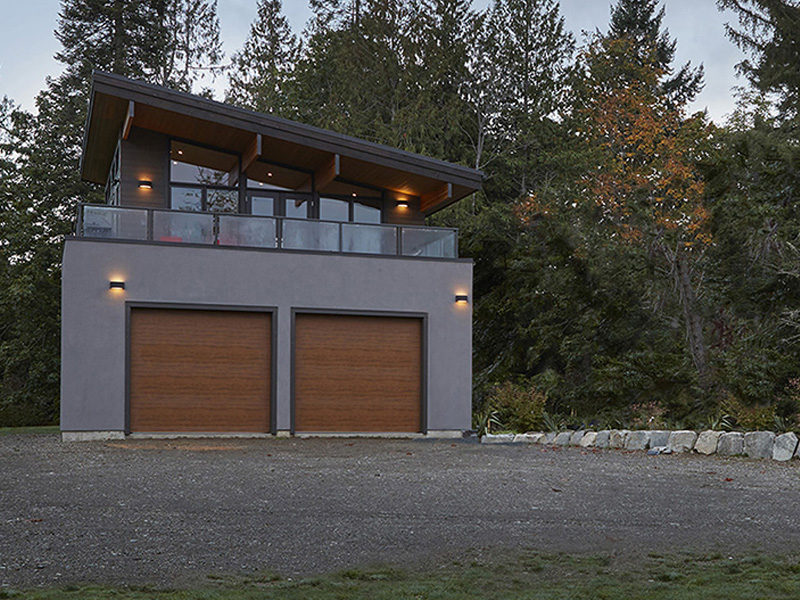
A fully separate structure on the same lot as the main house. Has its own kitchen, bathroom, entrance, and living space. In unincorporated Ventura County, you can build up to 850 square feet for a studio or one-bedroom, 1,000 square feet for two or more bedrooms, 1,200 square feet on lots larger than 9,000 square feet, and up to 1,800 square feet on parcels over 10 acres. Cities like Thousand Oaks and Ventura generally allow up to 1,200 square feet.
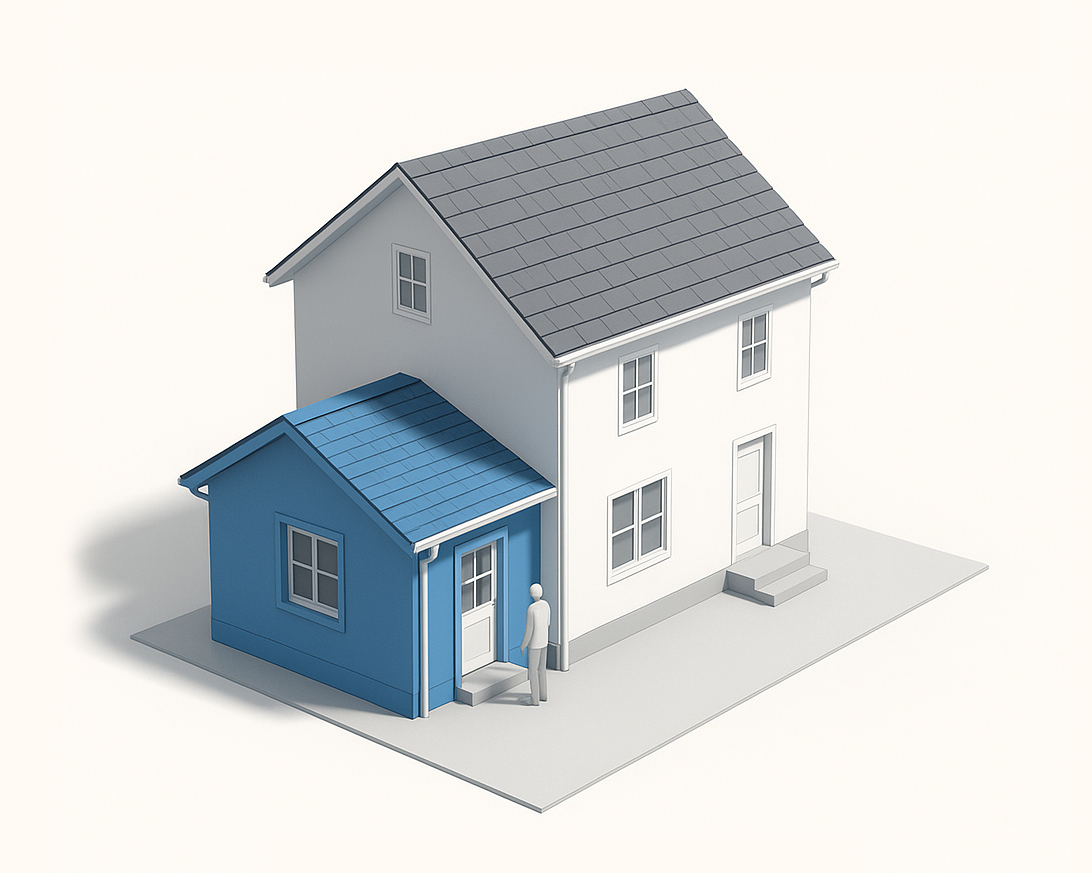
Built as an addition to the existing home, sharing at least one wall. Can be up to 50% of the primary dwelling’s square footage or 1,200 square feet, whichever is less.
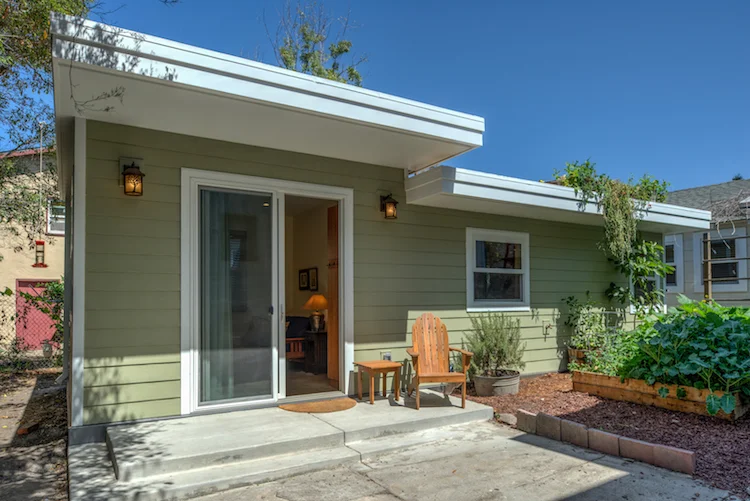
The most affordable path — converting an existing garage, basement, or attic into a legal unit. No new foundation, often no major exterior work. The catch: building code upgrades for ventilation, egress, fire separation, and utilities can add up.
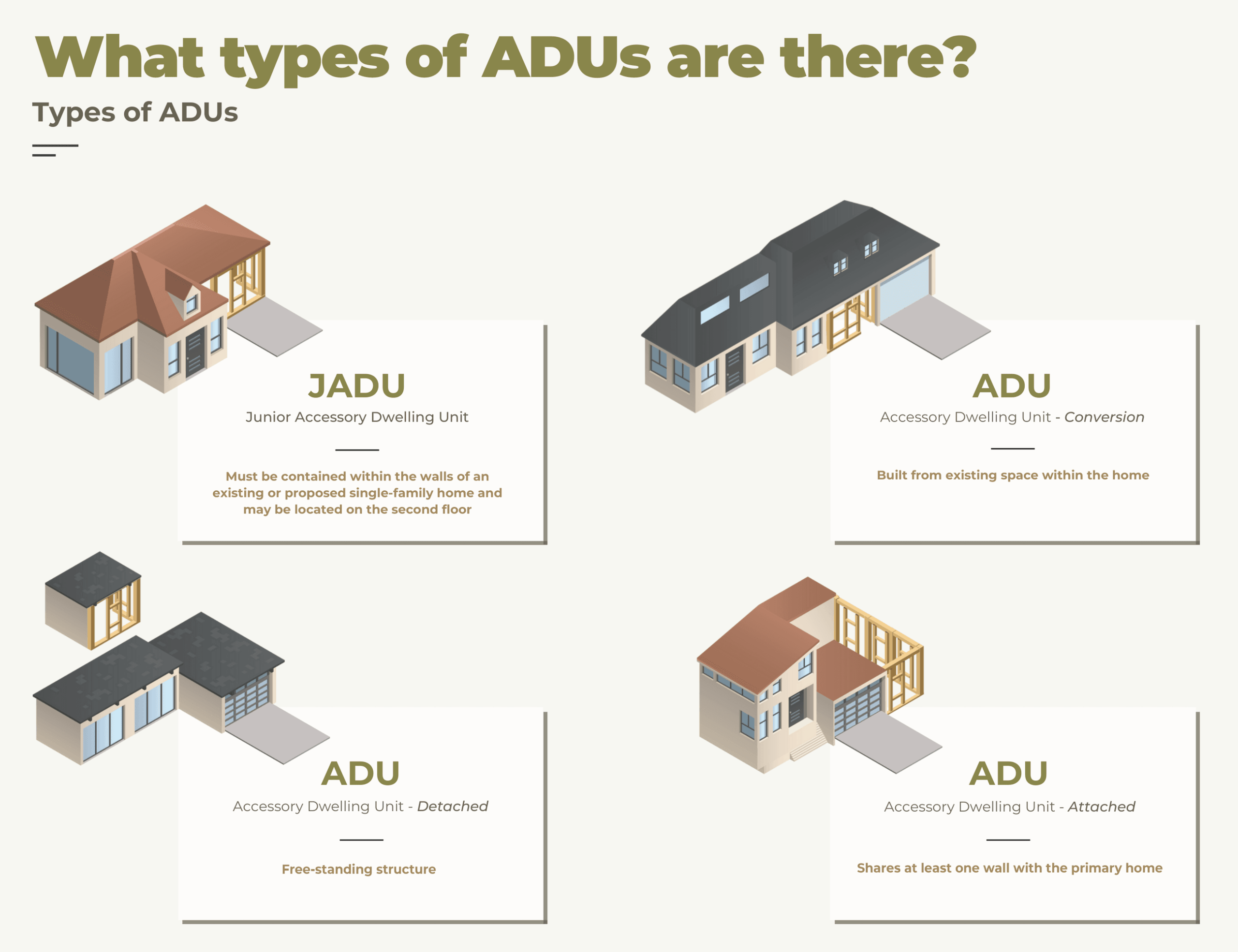
Capped at 500 square feet, contained inside an existing single-family home, with a separate entrance and (usually) a small efficiency kitchen. JADUs still require owner occupancy under state law — that didn’t go away with the broader ADU owner-occupancy repeal. Worth noting: as of 2026, JADUs aren’t allowed in the unincorporated Ventura County coastal zone until the county’s Coastal Zoning Ordinance update gets certified by the California Coastal Commission.
You can have one ADU plus one JADU on a single-family lot in Ventura County, for up to two additional units beyond the primary residence.
Here’s the data. A 2025 Federal Housing Finance Agency study tracked appraised values for California properties with and without ADUs from 2013 to 2023. Properties with ADUs appreciated about 22% more than properties without them over that decade. The median appraised value for California homes with ADUs hit $1,064,000 in 2023, compared to $715,000 for homes without.
Industry estimates put the typical resale value lift at 20% to 35%, though some Los Angeles studies have shown bumps as high as 58% in the right neighborhood. Appraisers I’ve worked with in Ventura County tend to land in the 15% to 25% range on a quality detached ADU, depending on comparable sales availability.
That’s the headline. The caveats are where the honest conversation lives.
The number that matters isn’t what an appraiser puts on the report — it’s what a buyer is willing to pay above what they’d pay for the same property without the ADU. Those two numbers should match, but in practice they sometimes don’t, especially when:
The cleanest value lift happens when the ADU is permitted, well-built, has its own utilities (or is set up to be sub-metered), and sits in a neighborhood where buyers are already used to seeing ADUs in listings.
A common rule of thumb in the ADU world: a newly built ADU will add roughly 100 times its monthly rental value to the property. In Ventura County, a clean detached ADU rents in the $2,200 to $3,500 range depending on the area and finish level. That math suggests an added value of roughly $220,000 to $350,000.
This is a useful starting point, not a guarantee. Appraisers don’t use it. Buyers don’t use it. But it’s a reasonable framework for sanity-checking whether a build pencils out before you’re $250,000 into it.

Not every neighborhood treats an ADU equally. The places I see the strongest value lift in our county:
Ventura (especially the midtown and hillside areas), Thousand Oaks, and the Ojai Valley all command strong long-term rental rates. ADUs in these markets generate enough income to support a clean valuation story — and that income story is what appraisers and buyers both respond to.
Camarillo, Oxnard, and the more family-oriented neighborhoods of Thousand Oaks all have meaningful demand from buyers looking for a place to house aging parents, adult kids, or both. An ADU in these markets serves a different need than pure rental income — and buyers will pay for it.
ADUs near the 101 corridor in Newbury Park, Camarillo, and Oxnard pick up renters who commute toward Los Angeles or Santa Barbara. Reliable demand translates to easier-to-justify pricing.
A backyard with the space and access for a detached ADU is more valuable than a tight lot where the only option is a garage conversion. Detached ADUs consistently add more value than conversions, all else being equal, because they’re more flexible, more rentable, and more private.
Same coin, other side. Cases where I caution clients to slow down:
Some Ventura County neighborhoods just haven’t seen enough ADU sales for an appraiser to pull strong comparables. When that happens, the appraisal can come in lower than the build cost — even on a beautifully done unit. The fix is usually time (more ADUs sell, more comps build up), but if you’re trying to refinance or sell soon after building, this is a real risk.

I’ll be blunt: an unpermitted unit usually subtracts value, not adds it. It can complicate financing, kill a deal in escrow, expose the seller to disclosure liability, and sometimes triggers required upgrades to bring it to code. The good news is that California’s AB 2533 (effective January 2025) created a real legalization path for unpermitted ADUs built before January 2020 — buyers and sellers can now bring older units into compliance without facing the worst penalties. If you’ve inherited a property with a questionable unit, the conversation is worth having before listing.
A $400,000 ADU on a $700,000 property in a neighborhood where everything else sells for $750,000 doesn’t recoup. The ceiling on what buyers pay is partly set by the neighborhood, not the property itself.
Anything that makes the ADU harder to rent or live in separately will pull value down. Separate meters or sub-metering, dedicated parking (where required), and a private entrance away from the main house all matter more than buyers think when they’re scrolling listings.

Click here to read the latest laws passed in California for 2026
The legal landscape for ADUs in California is more builder-friendly in 2026 than it has ever been. The bills worth knowing about:
Together, these reforms have cut the average permitting timeline by months and saved an estimated $5,600 to $7,600 on a typical 750-square-foot detached ADU in Ventura County compared to two or three years ago.
Build costs are the part most homeowners underestimate. In 2026 Ventura County, realistic ranges:
ADU Type | Typical Cost Range |
|---|---|
Garage conversion | $80,000 – $180,000 |
JADU (interior conversion) | $60,000 – $120,000 |
Attached ADU (new addition) | $200,000 – $350,000 |
Detached ADU (stick-built) | $250,000 – $500,000+ |
Detached ADU (modular/prefab) | $180,000 – $350,000 |
Site work, utility hookups, hillside conditions, fire-zone requirements, and finish level all push costs higher. If you’re in a fire hazard severity zone, expect additional cost for fire-hardening materials and possibly sprinklers.
The rule I share with homeowners: take your best contractor estimate, add 15% for the unknowns, and confirm financing for that higher number before you commit.
A clean ADU in Ventura, Camarillo, Oxnard, Ojai, or Thousand Oaks typically rents long-term in the following ranges as of 2026:
Short-term rental income can be higher in Ojai and beach-adjacent Ventura, but short-term rentals are regulated differently in every city — Ventura, Ojai, and unincorporated areas have specific rules and permit requirements, and rules can change. Don’t build a financial model on short-term income unless you’ve confirmed it’s legal at your address and you have a permit path.
About half of ADUs nationally are rented out. The other half house family members, serve as guest units, or function as home offices. The “value” of these non-rental uses is real but doesn’t show up in cash flow — it shows up in what your family doesn’t have to spend elsewhere on housing.
This catches people off guard. The good news: building an ADU in California does not trigger a full property reassessment of your existing home — Proposition 13 protects your primary structure’s assessed value. The new ADU is reassessed at its construction value and added to your tax bill.
Practically, your property tax bill goes up by roughly 1% to 1.5% of the ADU’s construction cost annually. A $300,000 ADU build will typically add $3,000 to $4,500 a year in property tax. Worth modeling into the math before you commit.
A few things I walk my buyers through when a listing includes an ADU:
This is the same approach I use for trust and probate purchases and divorce-related real estate — verify, document, don’t take the listing at face value.
If you’re selling a Ventura County home with an ADU, the way it’s positioned and priced makes a meaningful difference:
Patterns I’ve seen repeatedly:
Some homeowners build the ADU they want without thinking about what a future buyer would pay. The result: a beautifully crafted unit that sits in a neighborhood where buyers don’t value it. Build with both heart and the spreadsheet in mind.
Even though California law preempts most HOA restrictions on ADUs in single-family neighborhoods, HOAs in Ventura County still try. Some have legitimate architectural review standards. Read your CC&Rs before you finalize plans.
Insurance, additional property tax, maintenance, vacancy periods, occasional tenant turnover, utility costs you absorb between leases. Budget for a 10% to 15% expense reserve on rental income.
Construction loans, cash-out refinances, and dedicated ADU loan products all work — but each has tradeoffs. Talk to a lender who has financed ADUs in Ventura County before, not someone whose only experience is conventional purchase loans.
Sometimes yes, sometimes no. A high-quality permitted detached ADU in a neighborhood with good comp data tends to appraise close to construction cost. Garage conversions and over-improved luxury ADUs in modest neighborhoods often appraise for less than they cost. The reliable rule: the more comp sales of similar ADUs in your area, the closer appraisal will track build cost.
For unincorporated Ventura County, expect 3 to 4 months from submission to permit issuance for a standard detached ADU. With SB 543’s 15-day completeness review and pre-approved plan options in cities like Thousand Oaks, some projects are clearing permits in 6 to 10 weeks.
In theory, yes — AB 1033 (effective 2024) allows ADU condo-conversion sales, but only in cities that have specifically opted in. Most Ventura County cities have not yet adopted the necessary ordinances. Check with your city’s planning department for current status.
No. California reassesses only the ADU itself, not your primary home. Your primary structure stays under Prop 13. Your tax bill goes up by the assessed value of the ADU, not by a reassessment of your whole property.
Yes. As of 2026, cities can no longer use fire zone designation as a blanket reason to deny ADU permits. Fire-hardening requirements apply equally to ADUs and primary dwellings — Chapter 7A of the California Building Code for new construction in High and Very High zones. There’s more on this in the fire zone buying guide.
You have options. AB 2533 (effective January 2025) created a legalization path for ADUs and JADUs built before January 1, 2020. Local agencies can no longer deny the permit based purely on the prior lack of authorization. You’ll receive a Substandard Housing Inspection Checklist and work through the required health and safety upgrades. If you’re considering selling, get this resolved before you list — it’s much easier to handle outside of an active escrow.
Usually no, with rare exceptions. The cost, time, and stress of building an ADU rarely makes sense purely to add resale value. The exception: if you’d genuinely use the ADU for several years (family member, rental income, home office) and might sell eventually, the math can work. But “build to flip” rarely pencils out after holding costs and capital gains exposure.
The honest version of “do ADUs add value?” is: yes, when they’re permitted, well-built, in the right market, and priced for the right buyer. They’re one of the most reliable ways to add useful square footage and income potential to a Ventura County property in 2026. They’re also one of the easier ways to spend $300,000 on something that doesn’t appraise for $300,000 if you’re not careful.
I do free consultations with homeowners weighing the build-or-sell question, and with buyers evaluating homes that already have ADUs. We can look at your specific lot, check recent comp sales in your neighborhood, talk through the rental income realistic for your address, and help you decide whether the math works.
If you’re earlier in the process and just want to know what your home is worth as-is — with or without an ADU — start with a free home valuation. Or call or text me at (805) 760-1371 and we’ll set up a time to talk.
For the official Ventura County ADU regulations, the Ventura County Resource Management Agency ADU page is the source of truth. For the broader California ADU framework, the California Department of Housing and Community Development ADU resources are kept current.
Jess Judd is a Ventura County REALTOR® with LIV Sotheby’s International Realty, recognized in the top 1.5% of agents nationwide by RealTrends. She helps buyers and sellers navigate complex transactions throughout Ventura, Camarillo, Oxnard, Ojai, Thousand Oaks, Santa Paula, Fillmore, and the surrounding communities. CalDRE# 02042718.
Nothing in this guide is legal, tax, or financial advice. Always consult with a qualified contractor, a real estate professional, and a CPA before making decisions about adding or buying a property with an accessory dwelling unit.